How to Choose Paper for Business Cards and Brochures
Choose paper by the job it must do. Compare GSM, surface, finishing and a real sample before approving business cards or brochures.
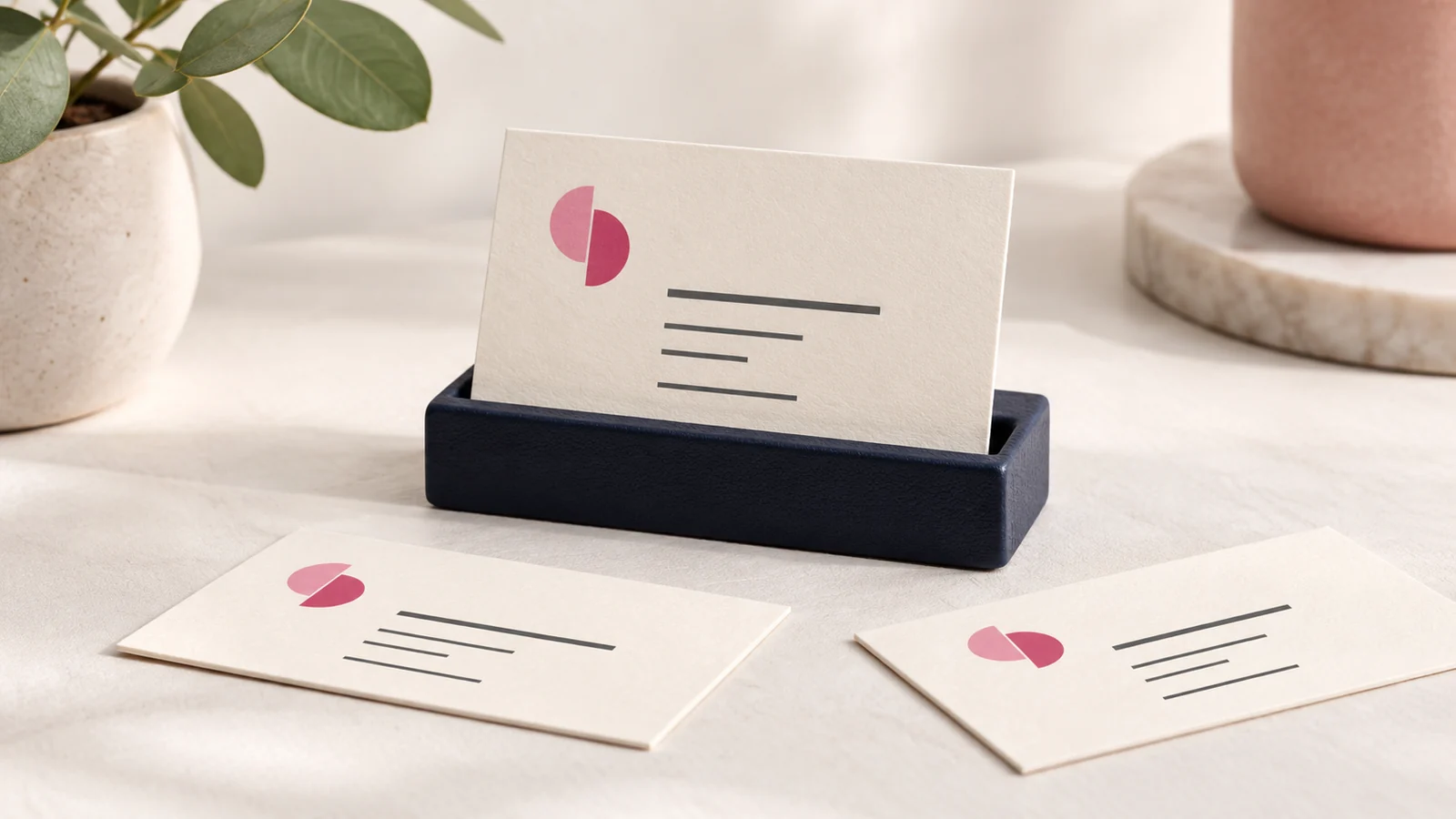
Choose paper by what the printed piece must do, then compare the exact stock, GSM, surface and finishing. A business card that needs a handwritten appointment and a brochure that must fold neatly need different checks. The largest weight number is not automatically the best choice.
For a Kenyan print order, ask the supplier to identify the available grade and show a relevant sample before approving the run. Keep the paper decision separate from the artwork decision: an approved layout does not confirm the material, coating or folded result.
What GSM tells you, and what it does not
GSM means grams per square metre: it measures a sheet's mass for a given area. Thickness, often called caliper, is a different measurement. Mohawk's paper-selection guide explains these measures separately, alongside surface and application.
Do not compare two quotations by GSM alone. Request the paper name or grade, weight, surface and printed sides together. If thickness matters to the finished piece, ask for the grade's specification or a physical sample rather than estimating it from weight. A description such as “premium card” leaves too much undecided.
Start with the reader's task
Write down how the piece will be handled. Will someone write on it, carry it in a wallet, read photographs on both sides, fold it or keep it in a presentation folder? Use that task to choose what the sample must demonstrate.
| Printed piece | Decision to make | Check before approval |
|---|---|---|
| Contact card with an appointment space | The reverse must accept the intended pen | Write on the actual finished sample and check it after handling |
| Photo-led folded brochure | Images and fold need to work together | Review a printed, folded sample with the intended layout |
| Two-sided service leaflet | Information must remain readable on both sides | Check show-through, contrast and small type under normal reading light |
| Booklet with a separate cover | Cover and inner pages have different jobs | Ask the supplier to identify both stocks and show the assembled result |
This is a decision checklist, not a list of materials Onek stocks or a universal production specification. The printer must confirm compatibility with the chosen process.
Separate paper surface from added finishing
Coated and uncoated describe the paper surface. Gloss, silk and matt labels can describe variants, while lamination is a separate finishing choice. Ask exactly what each quotation includes instead of assuming two suppliers use the same label in the same way.
Compare the finished result where writing, reflections or feel matter. A sample of the base paper does not establish how it behaves after a finishing treatment. If the card needs handwritten notes, include the writing area in the brief and test the actual pen on the proposed finish.
For brochures, check the photograph and text together. A surface you like on a plain swatch may not give the reading experience you want with your real content. Ask for the supplier's advice before locking the stock into the design.
Confirm folds and binding before choosing heavier stock
A folded leaflet is a physical object, not just a flat PDF. Ask the printer whether the proposed stock needs creasing, how the grain should run and whether the intended fold suits the layout. Avoid treating a single GSM threshold found online as a rule for every paper and production method.
Request a folded or assembled sample when fit matters. Check that panels close as intended, important text stays clear of the fold and the finished piece sits inside its folder or envelope. Confirm any change in finished dimensions before the designer exports production artwork.
A sample-approval brief: hypothetical example
Imagine a Kenyan repair company ordering a folded service brochure and a staff contact card. This is an invented planning example, not a Onek client project or a recommended paper package. The company wants the brochure to explain service options and the card to leave room for an appointment note.
Its brief could read:
- Brochure: quote the approved finished size, fold and quantity. Name the proposed paper grade, GSM and surface. Show a folded sample using the actual image and the smallest text in the layout.
- Contact card: quote the approved size and printed sides. Keep the appointment area usable with the team's usual pen; identify any coating or lamination applied to that side.
- Approval: the business owner checks content and handling. The printer confirms stock and production suitability. Record the approved sample and artwork version separately.
- Substitution: if the named stock becomes unavailable, propose the replacement and any cost or timing change before production. Obtain confirmation against the replacement sample rather than relying on the first approval.
This brief gives suppliers the same problem to solve without inventing a price, turnaround or material specification. Keep the resulting sample reference with the final order so “use the same paper again” has a clear meaning next time.
Compare the complete finished order
Ask whether the quote covers artwork, paper, printed sides, cutting, folding or binding, finishing, proofing and delivery. Confirm applicable taxes and any other charges in the final quotation. A sheet price does not by itself describe the cost of a finished brochure or a batch of cards.
For a booklet, distinguish pages, physical sheets and complete copies. For cards, specify how many different names or versions are required. Agree who checks each version; an attractive sample with one person's details does not approve the rest of the team.
Questions worth settling before you pay
Is there one best GSM for business cards?
No single weight settles surface, thickness, writing performance and finishing. Compare the actual options offered for your intended use and approve a suitable finished sample.
Does “matt” mean the paper is uncoated?
Do not assume that from the label. Ask whether it describes the paper's coating, a laminate or another treatment, and which sides receive it.
Can I choose the paper after the design is finished?
You can discuss options, but folds, finishing and supplier requirements can affect the artwork. Agree the physical specification early enough for the designer to prepare the correct files.
Give the designer and printer the same brief
For business card design, share the approved contact details and whether anyone needs to write on the card. For brochure and catalogue design, include the reading task, finished format and intended distribution. Ask the quote to identify which production work is included; do not assume design and printing are bundled.
Use the business-card information checklist to approve the content. If you are still choosing the document format, compare a brochure with a product catalogue before settling the physical specification.