Brochure or Product Catalogue: Which Does Your Business Need?
Choose between a brochure and product catalogue by looking at the buyer’s questions, product range, update frequency and the way your sales team works.
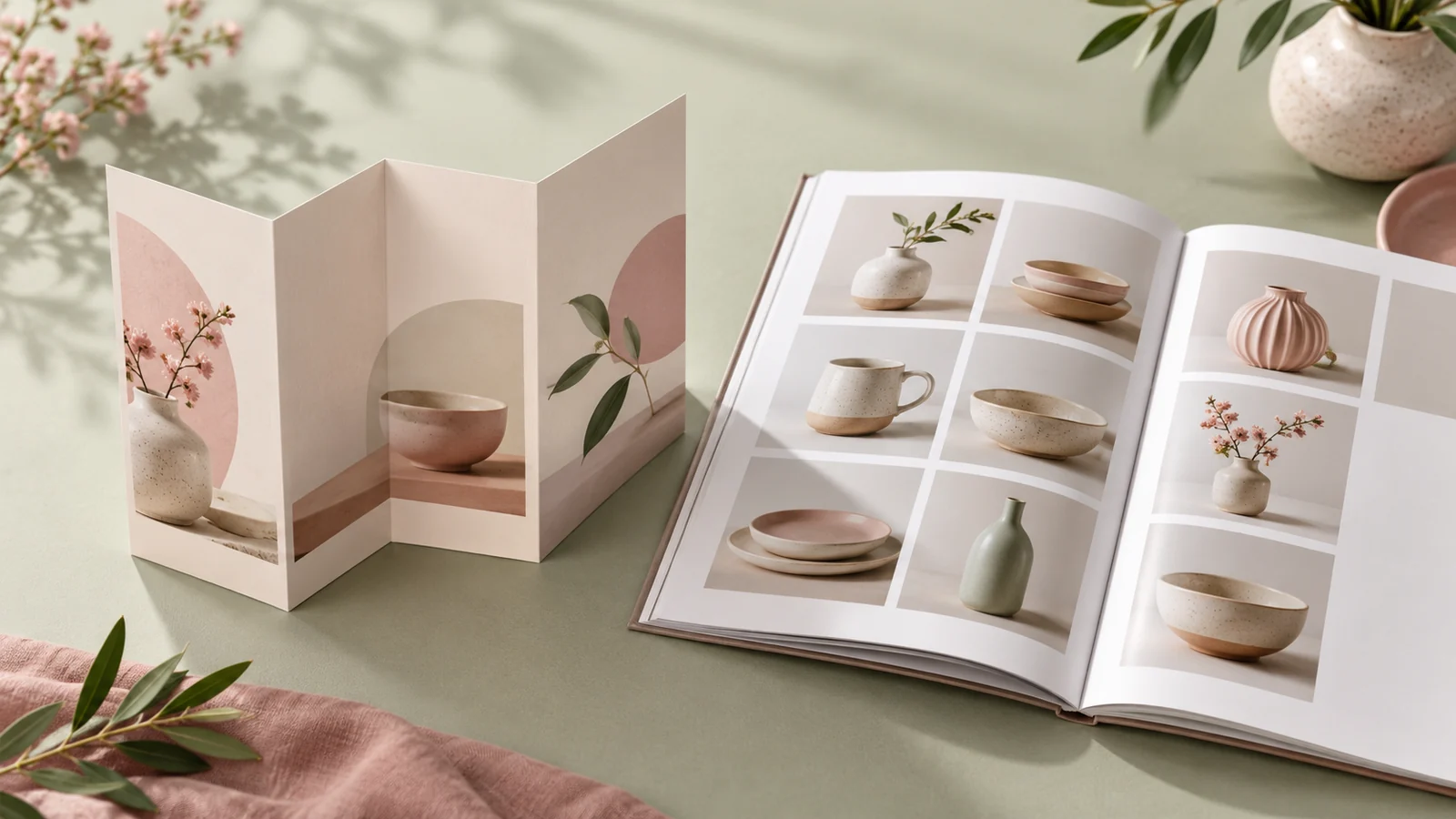
Choose a brochure when the main task is explaining your business, service or offer. Choose a product catalogue when buyers need to browse and compare a range of items using consistent information. The difference is the decision the document supports, not simply its size or number of pages.
A business may eventually need both, but starting with the right format avoids unnecessary design work. Before commissioning either, ask what customers currently struggle to understand and what your sales team repeats in conversations.
Use a brochure to explain and persuade
A brochure gives you room to introduce the offer, explain the process, show relevant evidence and invite the next step. It suits services that need context or products that require a more focused story. The reading sequence is usually deliberate, moving from the buyer’s need to the proposed solution.
For example, a training provider might explain course categories, delivery approach and how an organisation requests a proposal. A long list of course codes would not replace that explanation. The brochure’s job is to help the reader understand fit before discussing detailed arrangements.
Use a catalogue to support comparison
A catalogue works best when information follows a repeatable structure. Each item might need a name, image, size, material, options and ordering reference. The reader should not have to decode a different layout for every product.
Create a product information sheet before design begins. Confirm which fields are mandatory and use consistent units. If a specification is unavailable, resolve it or clearly identify the limitation rather than filling the space with a guessed value. Accurate product data matters more than decorative variety.
Think about how often information changes
Prices, availability and product variants can change faster than the overall business story. A printed catalogue containing all of them may become outdated quickly. Consider keeping frequently changing details on a maintained page or price list while the catalogue carries more stable product information.
This is a workflow decision, not a reason to hide useful information. If prices are important to the buying decision, provide an accessible and current way to obtain them. Assign someone to update the destination and explain when a formal quote is required.
Choose the right distribution format
A digital PDF can include navigation and links, while print offers a physical handover. Consider how the document will be read: on a phone, in a meeting, at a trade counter or during product selection. Dense comparison grids may work on a large screen but become frustrating on a small one.
Ask for a proof using real content, including the longest product name and the most complicated specification. This reveals whether the design system can handle the full range. A layout tested only with short placeholder text may require substantial rework later.
Estimate scope before requesting a quote
For a brochure, count sections and identify the writing and image work required. For a catalogue, count products, variants and categories as well as pages. A catalogue with many similar items can still demand significant data checking and image preparation.
Confirm who supplies descriptions, who approves specifications and how revisions will be consolidated. Onek Designs’ brochure and catalogue design service should be briefed with those responsibilities so the design scope matches the actual workload.
Make the documents work together
If you need both formats, let the brochure explain the business and the catalogue support product selection. Use consistent typography, colours and contact information. Cross-reference the documents only where it helps the reader, rather than repeating entire sections in both.
Maintain a master asset folder and a version log. Sales staff should know which document to send and when. Remove outdated versions from shared folders so a customer does not receive an old price or discontinued item from a well-meaning colleague.
Questions buyers often ask
Can a brochure include products?
Yes. A focused selection can illustrate the offer. It becomes a catalogue in practical terms when systematic browsing and comparison are its main purpose.
Must a catalogue show prices?
Not always, especially where pricing depends on quantities or configuration. Explain the quotation process and make enquiry references clear. Avoid making readers guess which product they are asking about.
Can the same design be printed and shared digitally?
The visual system can be shared, but exports may differ. Confirm print specifications, file size, navigation and link requirements before final delivery.
Choose the format before choosing the layout
Share your product range, sales process and update frequency with Onek Designs. The resulting document should make the next buying decision easier rather than merely present more pages.