How to Brief a Mascot Designer on Poses Expressions and Files
Write a mascot brief covering personality, expressions, poses, size tests and file handover so the character works across your planned applications.
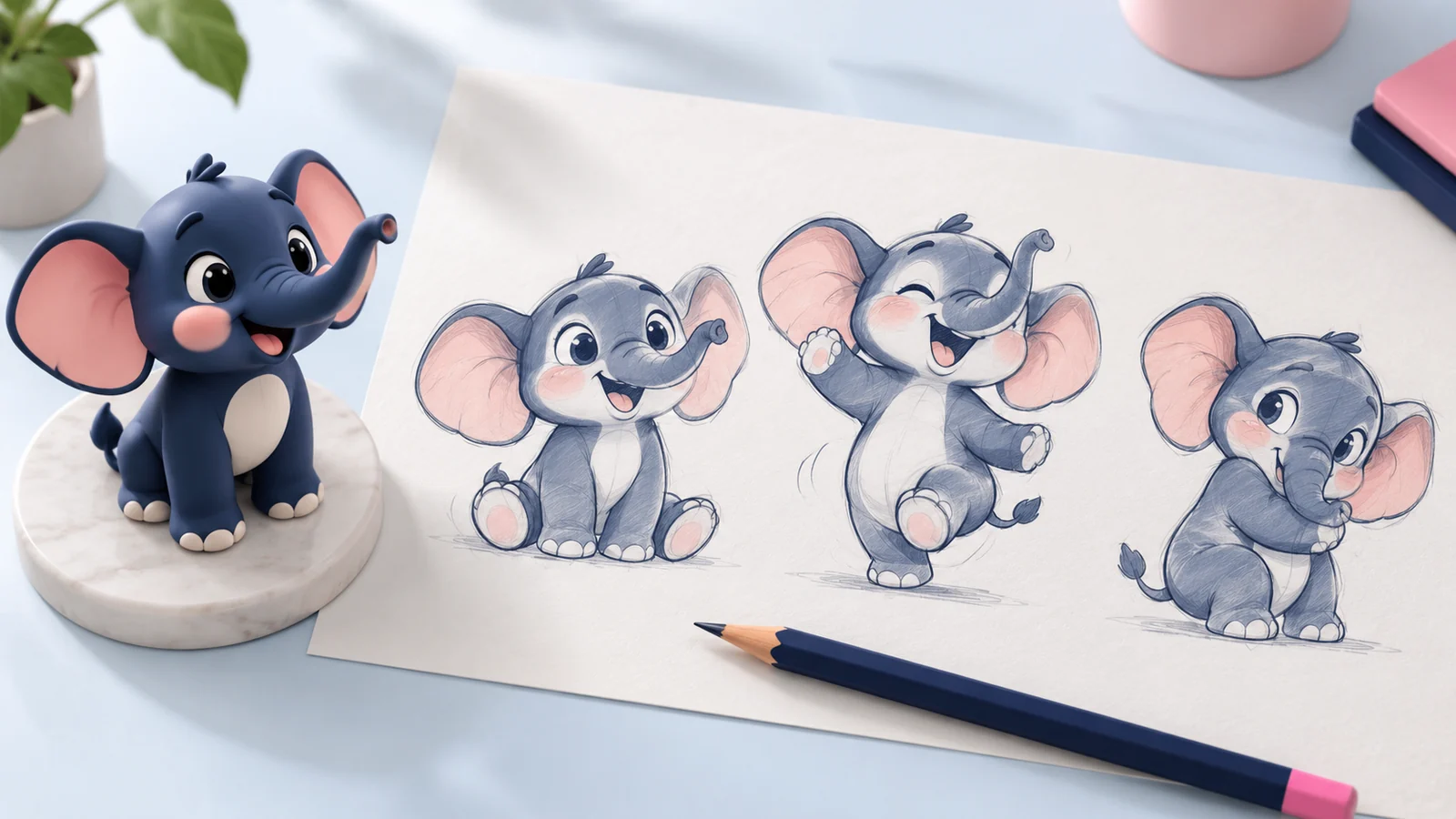
A mascot brief should explain what the character does, how it behaves and which assets the business needs at handover. Naming an animal or requesting a friendly face is only the beginning. The useful detail lies in the situations where the character will appear and the actions it must communicate.
Build the brief around a first set of real applications. This keeps the scope manageable and makes it possible to evaluate concepts against practical requirements. You can expand the character system later once the main design is approved and tested.
Write a short character description
Describe the role, personality and relationship with the audience. Is the character a helpful guide, an energetic host or a knowledgeable companion? Use a few meaningful traits and explain how those traits affect communication.
Also identify behaviours that would be inappropriate. A mascot helping customers with support questions should not appear dismissive or mocking. A character representing a premium product may need restraint in its expressions. These boundaries help future designers keep the personality consistent.
Specify the essential poses
List actions rather than vague requests for variety. A welcome pose, pointing pose, thinking pose and celebration pose each serve a different communication purpose. Prioritise the ones connected to your first campaign or customer journey.
For every pose, write the intended use. “Pointing to a product feature in a social graphic” gives more direction than “pose three.” Clarify whether the character needs full-body, half-body or head-only compositions so the designer can plan proportions and detail.
Define expressions with context
Choose expressions that fit actual messages: reassurance, curiosity, confidence or excitement. Avoid demanding a large emotional range without a reason. Similar expressions can become difficult to distinguish at small size and add work without adding useful options.
Review the face and body language together. An encouraging face paired with an aggressive stance may send mixed signals. Ask for expressions to be shown at their likely display size, especially when the character will appear in stickers or compact mobile interfaces.
Explain the visual environment
Provide the brand colours, logo and examples of existing layouts. Identify backgrounds the mascot must work on and whether it will appear with photographs, flat graphics or product imagery. This helps avoid a character that looks detached from the rest of the identity.
Include any print or fabrication requirements. A detailed shaded illustration may need an alternate version for simple printing or embroidery. Agree those adaptations explicitly rather than expecting one file to suit every production method.
Plan the file handover
Ask which files will be editable and which will be exported for everyday use. Specify whether transparent backgrounds, separated elements or scalable artwork are needed. Animation preparation should be discussed separately because a static character file may not be organised for movement.
Confirm naming conventions for poses and expressions. A folder called mascot-welcome is easier to use than a collection of numbered exports with no explanation. Include a reference sheet showing the approved character proportions and the intended use of each asset.
Agree the review sequence
Review the basic silhouette and personality before refining every pose. Once the core character is approved, check the expression set and applications. This reduces the risk of repeating the same correction across a large number of finished illustrations.
Consolidate feedback around the brief. If a pose feels wrong, explain whether the problem is tone, clarity or brand fit. Onek Designs’ mascot design service can then be scoped with a defined concept stage, revision allowance and delivery set.
Questions to resolve before production
Should we request animation files immediately?
Only if motion is part of the agreed plan, but mention future intentions early. The designer can explain which preparation is useful now and which work belongs in a separate animation phase.
Can we add seasonal outfits later?
Yes, with a consistent character system and an agreed brief. Keep the core proportions and recognisable features controlled so each adaptation still belongs to the same mascot.
What if we only have a rough sketch?
A sketch can communicate the idea. Add context about the audience, role and applications so the designer knows which features matter and which are open to development.
Make the deliverables specific
Send your character description, pose list and application examples to Onek Designs. A precise brief makes both the creative review and final handover easier to manage.