Does Your Business Need a Brand Mascot?
Decide whether a mascot suits your business by considering its audience, communication role, applications and the ongoing work needed to use it well.
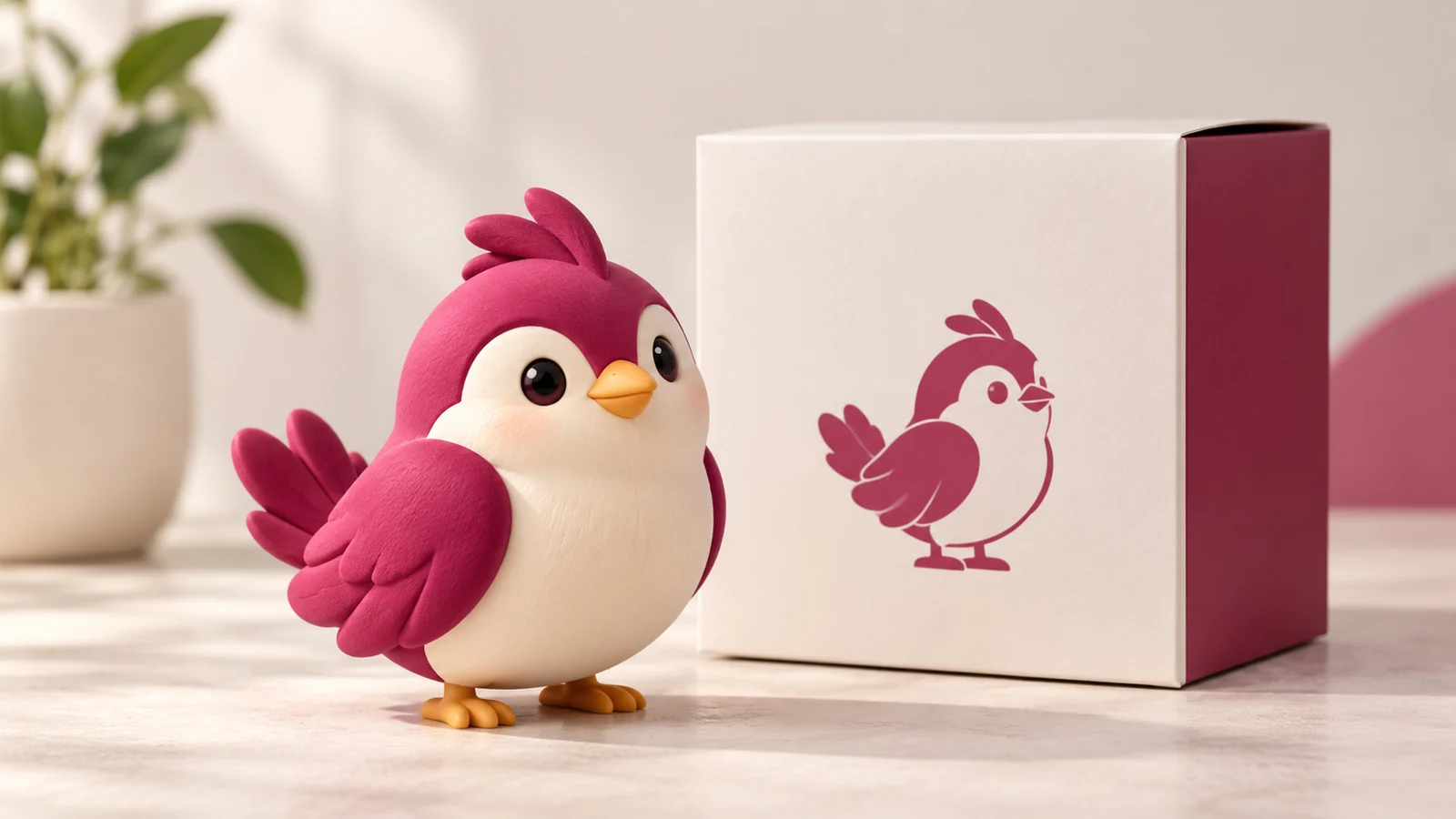
A mascot is useful when a recurring character can help your business communicate something that its logo and ordinary imagery cannot do as effectively. It might guide customers through a process, introduce products or give a campaign a recognisable personality. Its value depends on how it will be used after the initial reveal.
Before commissioning a character, write down three real situations in which it would appear. If every answer is simply “on our posts,” the role may need more thought. A clear job helps the designer develop a character with useful expressions, proportions and applications.
Distinguish a mascot from a logo
A logo identifies the business. A mascot can take part in communication: greeting, explaining, celebrating or demonstrating an action. Some identities combine those roles, but a detailed character may need a simpler version for small placements.
Do not assume the mascot must replace an established logo. It can work alongside the identity as a campaign or communication asset. Define that relationship before design begins so the character does not create a second, competing visual brand.
Check the fit with your audience
Consider the tone your customers expect and the decisions they are making. A playful character may suit some consumer products or educational content, while a more restrained character may be appropriate in other settings. Industry labels alone should not determine the answer.
Avoid reducing an audience to a stereotype. Describe the behaviour or communication need you want to support. For example, a character could help new users understand a complicated ordering process without making the business feel childish.
Give the character a repeatable role
Choose a role that can produce useful content over time. A guide can answer recurring questions. A product character can demonstrate use cases. A campaign character can connect a series of announcements. These roles suggest different poses and expressions.
Write a few example messages before drawing begins. If the character sounds inconsistent across them, resolve its personality and voice. A mascot that changes from formal expert to chaotic comedian between posts can confuse the brand rather than strengthen it.
Plan practical applications
List the required sizes, backgrounds and formats. Packaging, social graphics, stickers and animation have different production needs. Decide whether the first phase needs a single pose or a small system of expressions and actions.
Test the character as a small silhouette and in a simple colour treatment. Fine details that work in a large illustration may disappear on a label. Ask how the design can be simplified while remaining recognisable, and include those versions in the scope where needed.
Consider the ongoing workload
A mascot becomes more useful through consistent application. Someone must maintain the files, brief new poses and keep the character’s personality coherent. Budget for those future uses instead of treating the first illustration as the entire programme.
Static artwork and animation are separate deliverables. If motion is likely, mention it at the start so the designer can consider suitable construction and handover. Onek Designs’ mascot design service can be scoped around those applications rather than an undefined character request.
Evaluate concepts against a written brief
Compare concepts for audience fit, clarity of personality, recognisability and usefulness in the agreed placements. Ask whether the character can perform the planned role without excessive explanation. Personal preference matters, but it should not be the only criterion.
Review originality carefully and avoid requesting a near-copy of a famous character. Use references to explain qualities such as energy, shape or illustration style. Confirm the agreed usage and ownership terms before putting the character into commercial production.
Common mascot questions
Is a mascot only for children’s brands?
No. The appropriate style and role depend on the audience and communication task. A character can be sophisticated, instructional or humorous without being aimed at children.
Can we start with one pose?
Yes, if that meets the immediate use. Be clear about which additional poses or expressions would require new work. A small, purposeful starting set can be easier to maintain.
Does a mascot guarantee more engagement?
No. The message, distribution and usefulness of the content still matter. Evaluate whether the character helps people understand or remember the communication rather than assuming it produces a particular result.
Define the role before the appearance
Share the audience, sample messages and intended applications with Onek Designs. Those details create a stronger foundation than choosing an animal or character style in isolation.
Read next
How to Brief a Mascot Designer on Poses Expressions and Files