Event Season Marketing Without Claiming Official Sponsorship
Plan a relevant event-season campaign around your own offer and approved assets, with clear boundaries on sponsorship claims and a measurable response.
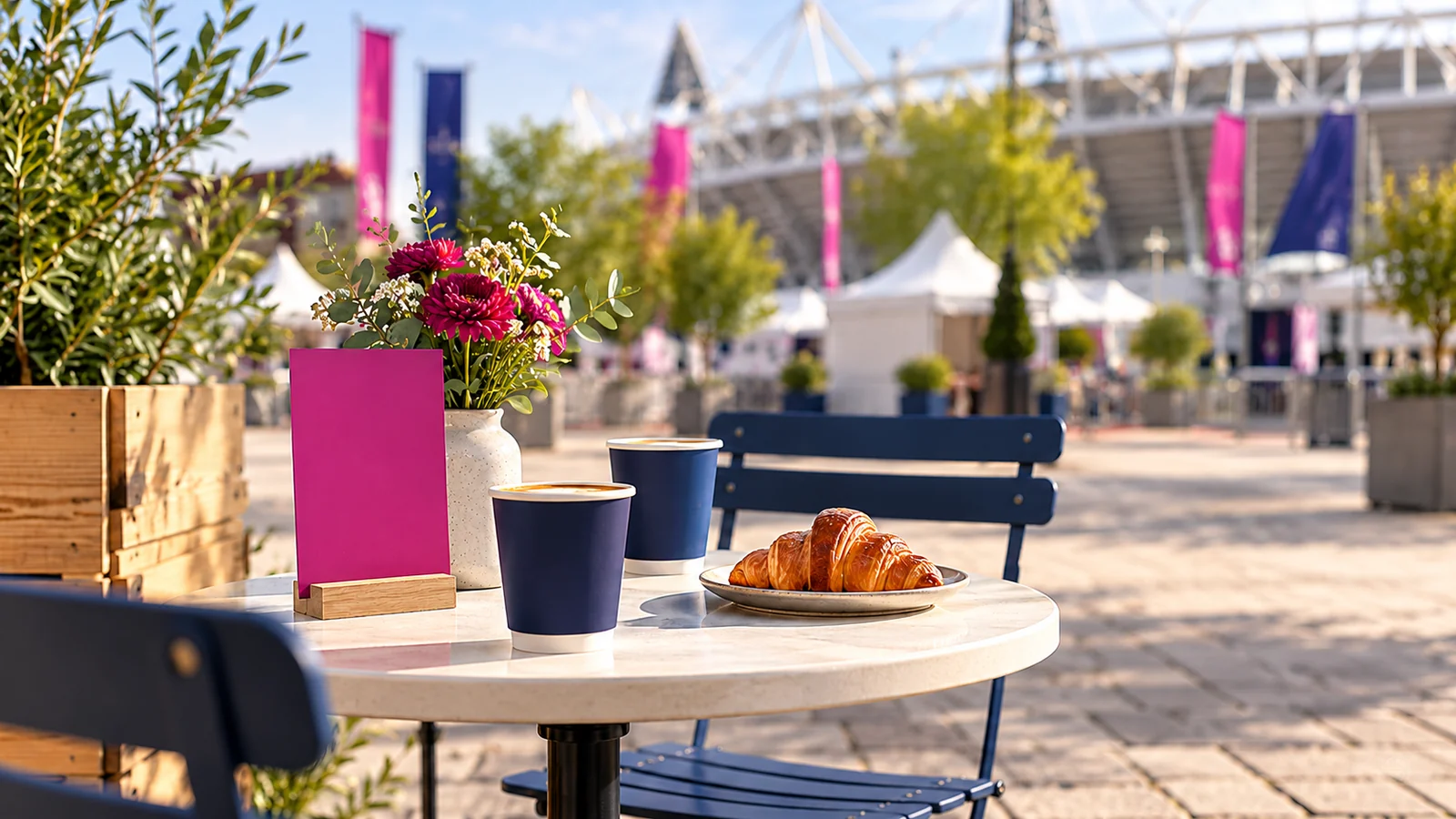
A business can build a timely campaign around customer interest in an event season without implying it is an official sponsor. Start with a useful offer for the audience and make the business’s actual role clear. Relevance should come from what you provide, not from suggesting an association that has not been agreed.
Terms such as ambush marketing can describe different tactics, some of which create avoidable confusion or permission problems. A practical brief should define the activity precisely and identify which assets, spaces and relationships are authorised before design or production begins.
Start with the audience’s real needs
Ask what customers need during the period: transport information, suitable products, convenient meals, printing or another relevant service. Choose an offer your business can deliver well. A useful connection is stronger than placing an event reference beside an unrelated product.
For illustration, a nearby café could promote its own extended opening hours to people attending activities in the area, provided those hours are accurate. The campaign can explain the café’s offer without presenting it as an event partner or using unapproved event branding.
Define the relationship accurately
Record whether the business has any official agreement, venue permission or partner status. Use relationship labels only when they reflect that agreement. A supplier, nearby business and official sponsor have different roles and should not be presented interchangeably.
If a proposed concept depends on event names, logos, imagery or a venue, have the relevant permissions and conditions checked before production. This article is a planning framework, not a determination that a specific use is permitted. Resolve uncertainty about the actual concept rather than relying on a generic label for the tactic.
Build the creative around your own identity
Use the business’s approved assets and a distinctive message. Show what the customer can do, buy or attend through your offer. Avoid copying another campaign’s visual system so closely that the audience could reasonably misunderstand who is behind it.
Keep dates, availability and response details clear. Timely marketing has a short useful window, so inaccurate information can spread quickly. Assign one person to approve the facts and another to check that the final creative remains within the agreed concept.
Choose channels you can manage
Select channels based on where the intended audience will encounter the offer and how you will respond. Social content, a landing page, approved physical placements and customer communication may play different roles. Do not assume every campaign needs every channel.
For physical activity, confirm the venue, distribution arrangements and operating responsibilities. Keep public access and the surrounding event experience in mind. A campaign should create a useful interaction rather than depend on disrupting another organiser’s activity.
Give the campaign a measurable action
Choose a response such as a booking, product enquiry or redeemed offer. Explain the terms clearly and ensure staff can recognise the campaign. A burst of attention is difficult to evaluate if no one records what happened afterward.
Use a dedicated page, reference or other appropriate tracking method where practical. Keep estimates of reach separate from verified responses. Do not report assumed exposure as a guaranteed audience or claim that every attendee saw the promotion.
Review the concept before spending on production
Check audience relevance, factual accuracy, permissions, operational capacity and the response journey. The more a concept depends on another organisation’s identity or space, the more important it is to resolve those dependencies early.
When discussing campaign strategy with Onek Designs, describe the proposed activity and the business’s actual relationship to the event. The brief should make boundaries explicit rather than leaving them for the designer to infer.
Common campaign questions
Must an event-season campaign use the event logo?
No. A relevant offer can be communicated through your own identity. Use external marks only when the specific use has been appropriately cleared.
Can a nearby business call itself an official partner?
Only when that accurately reflects an agreed relationship. Proximity or audience relevance does not establish partnership.
What should we report afterward?
Report the activity completed, actual responses and operational lessons, with any estimates clearly identified. Keep the conclusions within the evidence collected.
Plan relevance with clear boundaries
Share the audience, proposed offer and available permissions with Onek Designs. Build a campaign that stands on the strength of your own business and a clear customer action.
Read next
How to Write a Brand Activation Brief from Idea to Follow Up